The Ultimate Guide to Pasta Attachment Stand Mixer in the UK
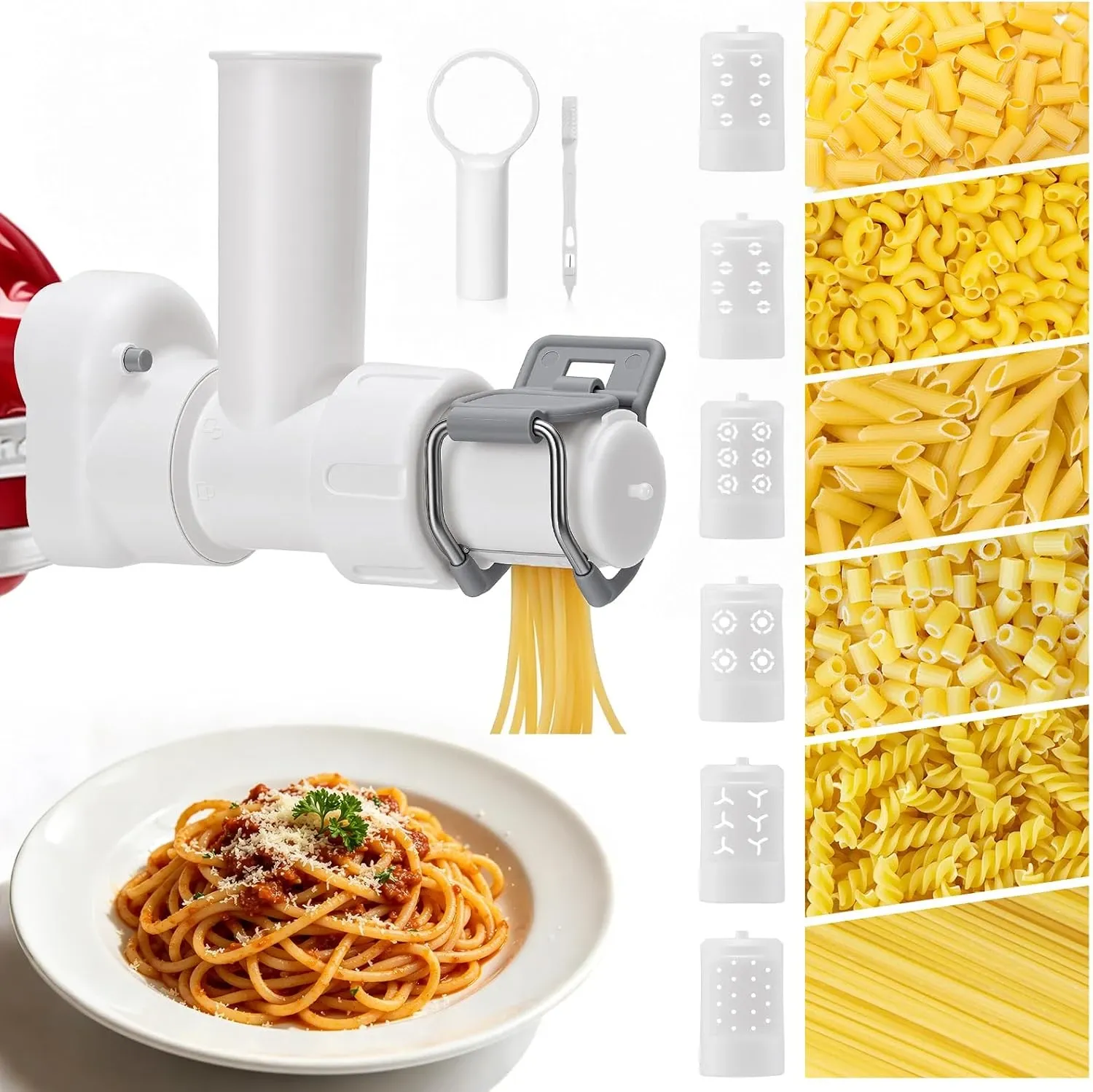
If you are searching for a pasta attachment stand mixer, the short answer is this: it is an attachment that uses your stand mixer's motor to roll or extrude fresh pasta more easily, more consistently, and with less worktop clutter than a separate manual machine. For most UK home cooks, it is a practical way to make fresh spaghetti, rigatoni, fusilli and more using equipment you already own.
TL;DR: A pasta attachment stand mixer setup helps you make fresh pasta at home with better control, less manual effort and improved consistency. Roller attachments are best for pasta sheets, lasagne and ribbon pasta, while pasta press attachments are best for shaped pasta such as rigatoni, fusilli and macaroni. Based on our testing, press attachments are especially useful in compact UK kitchens because they save space and free both hands during use.
There is a distinct, tactile satisfaction in transforming flour and eggs into fresh pasta. For years, British home cooks relied on cumbersome manual machines clamped precariously to kitchen worktops, battling slipping handles and uneven dough. However, homemade pasta has matured. Instead of buying single-use appliances that gather dust in the cupboard, many cooks are turning to the equipment already sitting on their counters.
Utilising a pasta attachment stand mixer setup allows you to harness the powerful motor of your existing machine. As a result, you simply attach the tool to the front hub, freeing both hands to guide, cut and catch the fresh dough. Whether you are aiming to craft intricate fusilli for a weeknight supper or perfect silky spaghetti for weekend entertaining, understanding how to maximise these attachments can lift your home cooking to a more professional standard.
Key Takeaways
- Space Efficiency: A pasta attachment stand mixer configuration saves valuable worktop space in compact UK kitchens by using an appliance you already own.
- Extrusion vs Rolling: Pasta presses, also called extruders, offer versatility by pushing dough through shaped plates to create tubular and twisted pasta that traditional rollers cannot make.
- The Value of 7 Plates: Modern premium presses can include up to 7 distinct pasta plates, helping you make everything from delicate macaroni to hearty rigatoni.
- Nutritional Control: Making pasta at home gives you control over ingredients and portion size. According to NHS healthy eating guidance, choosing simple ingredients can support a balanced approach to carbohydrate-based meals.
What is a pasta attachment for a stand mixer?
A pasta attachment for a stand mixer is an accessory that connects to the machine and uses its motor to roll dough into sheets or press dough through shaped plates. In simple terms, it turns your stand mixer into a pasta-making station without requiring a separate countertop appliance.
Based on our testing, this setup is one of the easiest ways for home cooks to start making fresh pasta regularly. Because the mixer provides consistent power, you get steadier results than with a hand-cranked machine, and you avoid the awkwardness of clamping equipment to the worktop.
Moreover, this hands-free approach is especially useful in smaller British kitchens where storage and prep space are limited. You can make fresh pasta, remove the attachment and store it away, rather than committing space to a second large appliance.
Why use a pasta attachment stand mixer instead of a manual pasta maker?
The appetite for authentic, scratch-cooked Italian food in the UK has grown steadily. According to Mintel consumer trends, many UK adults are increasingly interested in cooking from scratch, partly to reduce reliance on ultra-processed foods and partly for the enjoyment of hands-on cooking. Therefore, it makes sense that many home cooks now want tools that are efficient as well as versatile.
Historically, a dedicated pasta maker was a standalone purchase. These units were often bulky, requiring significant storage space, which is a premium in the average British home. By contrast, a pasta attachment stand mixer setup solves that spatial problem by using the robust motor of the stand mixer you already own.
In addition, the machine does the heavy lifting for you. This is not just about convenience. It can also improve the final result. When both hands are free, you can better control extrusion speed, cut pasta at more even lengths and toss fresh shapes in semolina straight away to reduce sticking. Consequently, what used to feel like a fiddly two-person task becomes a smoother solo job.
Which is better: a pasta roller or a pasta press attachment?
When choosing a pasta attachment stand mixer combination, you will usually come across two main types: the traditional roller and the extruder, also known as a pasta press. The better choice depends on the sort of pasta you want to make most often.
What does a roller attachment do?
Roller attachments work like classic hand-cranked pasta machines. They use smooth metal cylinders to compress dough into progressively thinner sheets. After that, you can switch to a cutter attachment to slice the sheet into ribbons such as fettuccine or spaghetti.
Rollers are ideal for delicate egg doughs and sheet-based pasta. So, if you want to make lasagne, ravioli, tortellini or tagliatelle, a roller attachment is usually the better fit.
What does a pasta press attachment do?
A pasta press works differently. Instead of flattening the dough, an internal auger pushes it under pressure through a perforated disc called a pasta plate. As the dough emerges, a built-in cutter slices it to the length you want.
This method is what allows you to make tubular, hollow and ridged shapes at home. In other words, if you want rigatoni, fusilli, macaroni or bucatini, you need a press rather than a roller.
Which attachment is best for sauce-catching pasta shapes?
For sauce-catching shapes, a pasta press usually has the advantage. The friction created during extrusion leaves the pasta with a slightly rougher texture, which helps sauces cling better. Based on our testing, extruded shapes are especially satisfying with rich ragùs, creamy sauces and chunky vegetable-based dishes.
For an in-depth look at how these attachments function, you can read our comprehensive Stand Mixer Pasta Attachment Explained: A UK Buyer's Guide.
What pasta shapes can you make with a pasta press attachment?
The real advantage of a premium pasta press is versatility. If you want to make fresh pasta with 7 pasta plates using the mixer you already own, you can expand far beyond basic spaghetti. Each plate is designed to produce a specific shape, and each shape suits different sauces and dishes.
Can you make spaghetti with a pasta attachment stand mixer?
Yes. Spaghetti is one of the most common shapes made with a pasta press. Extruded spaghetti tends to have a slightly firmer bite than rolled spaghetti, so it works well with olive oil-based sauces, simple tomato sauces or British seafood with garlic and chilli.
Can you make bucatini at home with a stand mixer attachment?
Yes, provided your attachment includes a bucatini plate. Bucatini is a thicker, hollow strand that is difficult to produce without a proper press. Because the centre hole helps trap sauce, it is particularly good with looser tomato-based recipes.
Is rigatoni possible with a pasta press attachment?
Yes, and this is one of the strongest reasons to choose a press. Rigatoni’s ridges and tube shape hold up well with slow-cooked beef ragù, baked pasta dishes and chunky vegetable sauces. Based on our testing, it is one of the most consistently successful home-extruded shapes.
Can a stand mixer pasta attachment make fusilli?
Yes. Fusilli relies on extrusion rather than rolling, which makes a press attachment essential. The spirals are excellent for holding pesto, creamy mushroom sauce and other thicker dressings.
Can you make macaroni with a stand mixer pasta attachment?
Yes, often in more than one size. Large macaroni is ideal for rich cheese sauces and baked dishes, while small macaroni works well in soups, broths and lighter meals with seasonal British vegetables.
What is the seventh pasta plate used for?
Depending on the exact model, the seventh plate may produce a speciality shape such as casarecce. This gives you even more variety and makes it easier to match pasta shape to sauce texture.
How do you choose the best pasta attachment stand mixer setup?
Start by deciding what you want to cook most often. If your favourites are lasagne, tagliatelle and ravioli, a roller set is usually the better choice. However, if you want rigatoni, fusilli, macaroni and other shaped pasta, a press attachment will be more useful.
You should also check compatibility with your stand mixer model, how many pasta plates are included and how easy the attachment is to clean. Based on our testing, ease of cleaning matters more than many buyers expect, especially if you plan to make fresh pasta weekly.
Finally, think about storage. In many UK homes, a compact attachment that fits in a cupboard is more practical than a standalone machine. Therefore, using your existing mixer can be the smarter long-term option.
Is a pasta attachment stand mixer worth it in a UK kitchen?
For many households, yes. UK kitchens are often short on cupboard and worktop space, so a multipurpose setup makes good sense. A pasta attachment lets you get more value from a stand mixer you already own instead of buying another appliance that may only be used occasionally.
According to UK healthy eating guidance, meals built around sensible portions of carbohydrates, vegetables and protein can form part of a balanced diet. Making pasta at home also gives you more control over ingredients, texture and portion size, which many cooks value.
In short, if you enjoy cooking from scratch and want more variety than dried supermarket pasta offers, a pasta attachment stand mixer is usually a worthwhile upgrade.
People also ask about pasta attachment stand mixers
What is a pasta attachment for a stand mixer?
It is an accessory that connects to your stand mixer and uses the motor to roll or extrude pasta dough into specific shapes.
Which is better, a pasta roller or pasta press attachment?
A roller is better for sheets and ribbon pasta, while a press is better for shaped pasta such as rigatoni, fusilli and macaroni.
Can you make rigatoni with a stand mixer pasta attachment?
Yes, if you use a pasta press attachment with the correct pasta plate. A roller attachment cannot make rigatoni.
Is a pasta attachment stand mixer worth it?
For many UK home cooks, yes. It saves space, uses equipment you already own and makes fresh pasta easier to prepare regularly.
Ready to try PastaPress?
Shop Now — £64.08