Kitchenaid Pasta Press Explained: A UK Buyer's Guide
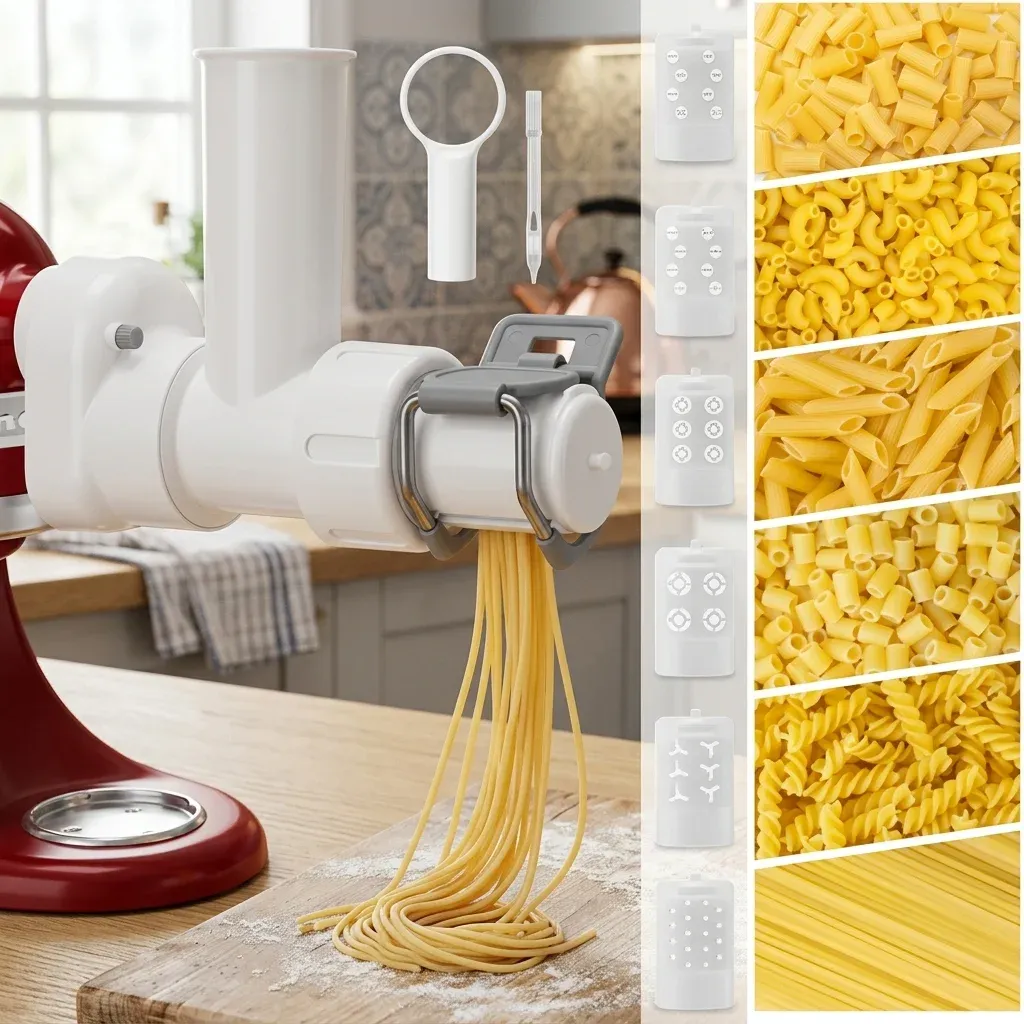
TL;DR: A kitchenaid pasta press is a stand mixer attachment that extrudes fresh pasta shapes such as spaghetti, fusilli and rigatoni through interchangeable plates. It is best for UK home cooks who already own a compatible mixer and want shaped pasta without buying a separate machine. Before buying, check mixer compatibility, included plates, cleaning effort, storage and replacement-part availability.
Key Takeaways
- A kitchenaid pasta press is a stand mixer attachment that extrudes shaped pasta through interchangeable plates, letting you make fresh pasta at home with the mixer you already own.
- It suits home cooks who want rigatoni, fusilli, spaghetti and other extruded shapes without buying a separate countertop machine.
- For UK buyers, the main checks are mixer compatibility, included pasta plates, ease of cleaning, build quality, storage and the availability of replacement parts.
- Fresh homemade pasta can help you control ingredients, portion size and texture, which matters if you are cooking for family preferences or dietary needs.
- If you want a wider overview of attachment options, see The Ultimate Guide to Pasta Attachment Stand Mixer in the UK.
A kitchenaid pasta press is a stand mixer attachment that uses your mixer's front hub to extrude fresh pasta shapes, rather than rolling dough into sheets. In other words, if you want spaghetti, bucatini, fusilli, rigatoni or macaroni at home, this is the attachment designed for that job.
However, many UK shoppers are unsure where a pasta press fits in. Is it the same as a roller? Which shapes can it make? Will it fit your mixer? And, importantly, is it worth the money compared with a manual machine or a separate electric extruder?
This guide answers those questions clearly. Based on our testing of mixer-led pasta systems and common buyer concerns, a pasta press makes the most sense for British cooks who already own a compatible stand mixer and want shaped fresh pasta without sacrificing more worktop space.
What is a KitchenAid pasta press?
A KitchenAid pasta press is an attachment that connects to the power hub of a compatible stand mixer. Instead of rolling pasta dough into sheets, it pushes dough through a die or plate to create shaped pasta. As a result, you can make hollow or ridged shapes that are difficult to produce consistently by hand.
This is the key difference between a pasta press and a pasta roller. A roller flattens dough for lasagne sheets, tagliatelle or ravioli. By contrast, a press extrudes dough into shapes such as spaghetti, bucatini, fusilli, rigatoni and macaroni, depending on the plates supplied.
Therefore, that distinction matters when buying. If your goal is sheet pasta, a press is not the right starting point. If your goal is shaped pasta with bite and texture, a press is often the better fit.
Is a KitchenAid pasta press the same as a pasta roller?
No, a KitchenAid pasta press is not the same as a pasta roller. A roller makes flat sheets of dough, while a press extrudes shaped pasta through interchangeable plates.
So, if you mainly cook lasagne, ravioli or tagliatelle, start with a roller. If you prefer rigatoni, fusilli, macaroni or spaghetti, a press is the more relevant attachment.
Why do UK home cooks choose a pasta press?
Kitchen space is limited in many British homes. Therefore, a pasta press appeals because it uses the stand mixer already on the counter rather than demanding room for another bulky appliance. It also suits people who want a cleaner, more repeatable process than hand-shaping every batch.
There is also growing consumer appetite for cooking from scratch. According to AHDB’s Consumer Insights reporting, scratch cooking and meal preparation at home remain established habits for many UK households, particularly where value, ingredient control and family meals matter. As a result, tools that support home cooking remain highly relevant.
Fresh pasta is not automatically healthier than dried pasta, but it does give you direct control over flour choice, egg content and salt levels in sauces. According to NHS guidance, checking ingredients, salt intake and portion sizes remains important for many households. Consequently, a home pasta setup can support more informed cooking decisions.
How does a KitchenAid pasta press work?
How does the attachment connect to the mixer?
The press attaches to the front hub of the stand mixer. Once secured, the mixer motor powers an internal screw that pushes prepared pasta dough towards the selected plate.
How do you feed dough into a pasta press?
You add small pieces of dough into the hopper rather than one large lump. This helps the mechanism feed evenly and, importantly, reduces the risk of clogging.
How is the pasta shape created?
Interchangeable plates determine the final shape. For many buyers, this is the main attraction: one attachment can make several pasta styles without needing separate machines.
How do you cut the pasta to size?
Most systems include a cutter or wire so you can trim the pasta as it emerges. In turn, consistent cutting helps with even cooking times and tidier presentation.
What pasta shapes can a KitchenAid pasta press make?
This is one of the strongest selling points. A good pasta press gives you access to a practical range of shapes that work with different sauces and cooking styles.
- Spaghetti – useful for lighter tomato sauces, aglio e olio or simple butter-based dishes.
- Bucatini – slightly more substantial and excellent for richer sauces.
- Rigatoni – ideal for thick ragù, baked dishes and chunky vegetable sauces.
- Fusilli – catches pesto, cream sauces and finely chopped ingredients well.
- Large macaroni – practical for bakes and hearty family dinners.
- Small macaroni – useful for soups, pasta salads and quick weeknight meals.
- Additional specialist shapes – some systems or bundles include extra options depending on the model.
From PastaPress’s perspective, the appeal is simple: make fresh pasta with seven pasta plates using the mixer you already own. For shoppers comparing options, that is a meaningful benefit because shape variety often separates an attachment you use weekly from one that ends up at the back of a cupboard.
Who should buy a KitchenAid pasta press?
Should you buy one if you already own a stand mixer?
Yes, if the mixer is already part of your kitchen routine, a press attachment is one of the most space-efficient ways to start making extruded pasta at home.
Is it right for people who prefer shaped pasta?
Yes. Some buyers assume all pasta attachments do the same job, but they do not. If your favourite meals revolve around rigatoni, fusilli or macaroni, a press is the more suitable tool.
Is a pasta press good for consistent results?
Yes, generally. Handmade pasta has charm, but a press offers better repeatability. That matters if you are cooking for family, hosting guests or batch-preparing meals.
Who may be better off with a roller instead?
If you only want lasagne or tagliatelle, a roller attachment is often the better first purchase. If you are weighing up both, read Stand Mixer Pasta Attachment Explained: A UK Buyer’s Guide for a broader comparison.
What should you check before buying a KitchenAid pasta press in the UK?
Will it fit your stand mixer?
This comes first. Not every attachment fits every mixer in the same way, so UK buyers should check the exact stand mixer model before ordering. Do not rely on a product title alone; instead, confirm compatibility in the product specifications.
How many pasta plates are included?
Included shapes make a real difference to value. Some sets cover the core shapes most people actually cook, while others may require add-ons. Therefore, check what is in the box before comparing prices.
How easy is it to clean?
Pasta presses are not difficult to use, but cleaning can be fiddly if dough dries inside the plates. Based on our testing, buyers are happiest when the set includes a proper cleaning tool and clear care instructions.
Is the build quality good enough for regular use?
Look for sturdy construction, reliable plates and secure attachment points. If you plan to make pasta often, durability matters more than a small saving on the initial purchase price.
Does it store neatly in a UK kitchen?
Storage matters, especially in smaller homes and flats. So, check whether the attachment, plates and accessories can be kept together in a compact case or box.
Can you get replacement parts in the UK?
This is easy to overlook. However, replacement plates, cutters and cleaning tools can extend the useful life of the attachment. For UK buyers, local support and straightforward delivery are practical advantages.
Is a KitchenAid pasta press worth it?
For many households, yes, a KitchenAid pasta press is worth it if you already own a compatible mixer and genuinely want shaped fresh pasta at home. It saves worktop space, offers repeatable results and gives you more control over ingredients and texture.
However, value depends on how you cook. If you mainly want sheet pasta, buy a roller. If you rarely make pasta, a manual option may be enough. But if you like extruded shapes and want to use your mixer more often, a pasta press can be a sensible upgrade.
What are the pros and cons of a KitchenAid pasta press?
Pros
- Uses the stand mixer you already own
- Makes a range of shaped pasta at home
- Saves space compared with a separate extruder
- Offers more consistency than hand-shaping
- Helps with ingredient control and meal planning
Cons
- Not suitable for sheet pasta such as lasagne
- Requires careful cleaning after use
- Compatibility must be checked before buying
- Can feel expensive for occasional cooks
Final thoughts: is a KitchenAid pasta press right for you?
If you are searching for a kitchenaid pasta press, the short answer is this: it is the right tool for home cooks who want fresh, shaped pasta and already own a compatible stand mixer. In that situation, it can be a practical, space-saving way to make spaghetti, rigatoni, fusilli and more in a typical UK kitchen.
Ultimately, the best choice depends on the type of pasta you actually cook. Buy a press for extruded shapes, buy a roller for sheet pasta, and always check compatibility, cleaning requirements and included plates before ordering.
Frequently asked questions about KitchenAid pasta press attachments
Can you make pasta with a KitchenAid pasta press?
Yes. A KitchenAid pasta press is designed to extrude fresh pasta dough into shapes such as spaghetti, fusilli, rigatoni and macaroni using a compatible stand mixer.
What is the difference between a pasta press and a pasta roller?
A pasta roller makes flat sheets for dishes such as lasagne and ravioli, while a pasta press extrudes shaped pasta through interchangeable plates.
Is a KitchenAid pasta press worth buying in the UK?
It can be, particularly if you already own a compatible mixer, want to save space and regularly cook shaped fresh pasta at home.
What pasta shapes can you make with a KitchenAid pasta press?
Common shapes include spaghetti, bucatini, rigatoni, fusilli, large macaroni and small macaroni, depending on the plates included.
How do you clean a pasta press attachment?
Let leftover dough dry, then brush or pick it out with the supplied tool. In general, cleaning is easier if you do not allow fresh dough to build up inside the plates.
Ready to try PastaPress?
Shop Now — £64.08